
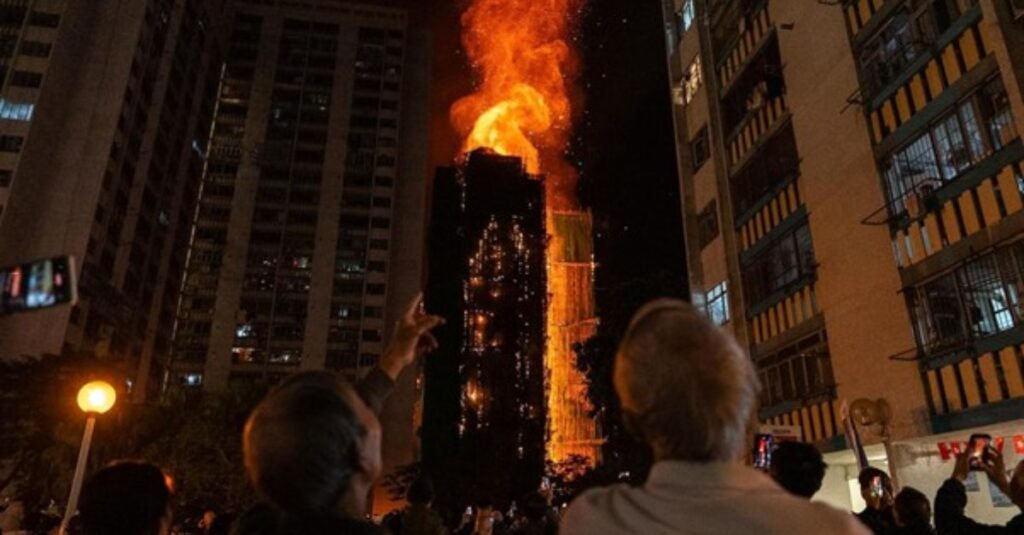
A major fire incident in Hong Kong recently reminded the world of a truth we often overlook: buildings don’t just burn, the systems fail. In high rise complexes, malls, hotels, hospitals, and commercial towers, a fire is rarely “just a fire.” It becomes a crisis of power stability, evacuation safety, emergency lighting, and life support continuity. And at the centre of all these systems stands one silent workhorse: The Transformer
This blog explores how fire related disasters expose the vulnerabilities in electrical infrastructure and why STS Transformers, with their eco-safe ester fluids, thermal stability, and fire resistant design, are becoming mission critical for modern buildings.
What Fires Reveal About Power Systems in High-Rise Buildings
When a fire erupts in a high rise building, the first few minutes determine whether the incident becomes a controlled event or a catastrophe. Here’s what typically happens during a building fire:
a) Mains Power Trips, But Emergency Loads Must Stay Alive
Lifts, water pumps, smoke extraction fans, alarms, emergency lighting — all are dependent on a stable power source during fire events. If the transformer is vulnerable to thermal stress or oil ignition, the entire electrical backbone fails instantly.
b) Heat Propagation Affects Electrical Rooms
The temperatures during a fire can soar beyond 600°C. Ordinary mineral oil transformers become high risk assets because mineral oil is combustible.
c) Firefighting Systems Depend on Reliable Power
Sprinklers, hydrants, firefighting lifts, and control systems fail if transformers aren’t designed for 24/7 mission critical reliability under stress. The Hong Kong incident showed how quickly a fire can escalate when building systems are unable to resist cascading failures.
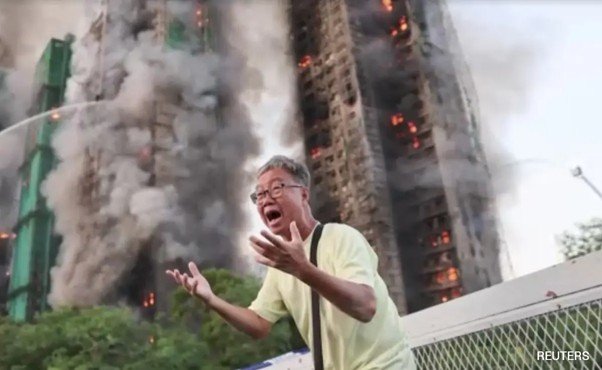
Why Traditional Transformers Become Vulnerable During Fire Incidents
1. Mineral Oil = High Fire Risk
Conventional transformers use mineral oil, which has a low fire point (~170°C).
If electrical faults occur during a fire, oil can ignite hencforth escalating the disaster.
2. Lack of Thermal Stability
During emergencies, load spikes increase drastically (evacuation lifts, pumps, alarms).
Weak transformers overheat and trip right when they are needed most.
3. Limited Overload Capability
A sudden overload can damage windings, leading to short circuits or complete outage.
4. No Real-Time Monitoring
Without IoT sensors, there is no visibility on oil temperature, hotspot rise, or impending failures, making the system reactive, not preventive.
STS Transformers: Designed for Fire-Safe, Mission Critical Infrastructure
At STS we engineer transformers specifically for buildings, high-rise complexes, airports, hospitals, malls, data centers, and emergency critical facilities. Here’s how STS ensures fire resilience, safety, and uninterrupted performance:
a) Eco-Safe Ester Fluid: The Game Changer for Fire Safety
STS offers Ester Fluid Filled Transformers, which are transforming safety standards globally. The higher fire point offered by Ester Fluids dramatically reduces the chances of transformer related fire intensification.
| Parameter | Mineral Oil | Ester Fluid (STS Option) |
| Fire Point | ~170°C | > 300°C (fire-resistant) |
| Biodegradable | No | Yes (Environment-friendly) |
| Thermal Stability | Medium | High |
| Suitability for Indoor Installations | Risky | Ideal |
b) Fail Safe Thermal & Overload Performance
During fire events, emergency systems draw unpredictable loads. STS transformers are engineered with:
- High-grade insulation
- Low-loss core design
- Superior heat dissipation
- 150% overload handling capability (short-duration)
c) IoT Enabled Real-Time Monitoring
STS Smart Transformers come with following optional sensors allowing facility managers to detect stress before failure occurs. Exactly the kind of intelligence needed in fire prone, high-density buildings.
- Oil temperature sensors
- Winding hotspot monitors
- Partial discharge detectors
- Load analytics
- Predictive maintenance alerts
d) Compact, Indoor Safe, Zero Leakage Design
STS designs comply with IEC, IS 1180, CE & RoHS (where applicable) and other building safety norms for indoor installations in
- Basements
- Fire pump rooms
- Utility floors
- High-rise service shafts
What Builders, Developers, and Facility Managers Must Learn from Such Incidents
1. Choose Fire-Resistant Transformers
Mineral oil is outdated for modern commercial buildings.
2. Design for Emergency Loads, Not Normal Loads
Fire events demand transformers that perform under extreme stress.
3. Prioritize Indoor Safety
Transformers must meet high fire point and low smoke emission requirements for enclosed spaces.
4. Implement IoT Predictive Monitoring
Emergencies aren’t the time to “hope” the transformer will survive.
5. Partner With Manufacturers Who Design for Mission-Critical Infrastructure
STS customizes transformers based on:
- Building height
- Load profile
- Fire zone requirements
- Emergency circuits
- Energy efficiency norms
STS: Powering Safer Buildings, Smarter Cities
The Hong Kong fire serves as a reminder: A single weak link in the power chain can put thousands of lives at risk. As India and global cities develop taller buildings, denser commercial zones, and energy-heavy infrastructure, transformers must evolve too. STS brings:
- Fire resistant ester fluid transformers
- IoT enabled health monitoring
- Indoor ready, compact, low leakage designs
- High-reliability engineering for 24/7 performance
We don’t just build transformers. We engineer safety, resilience, and uninterrupted power — even during the toughest moments.