
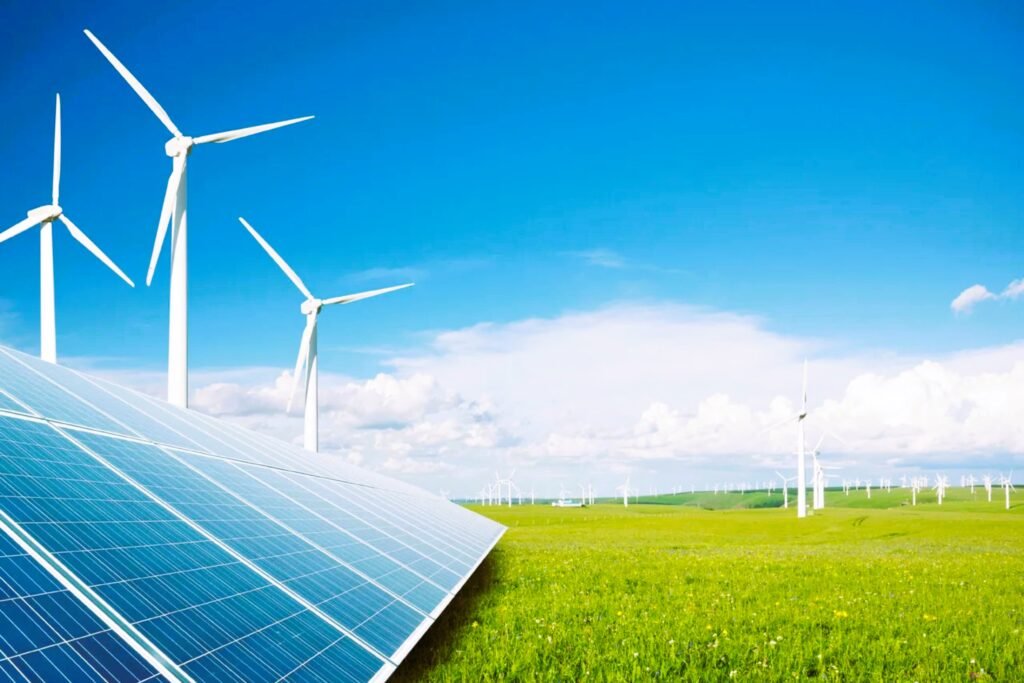
India’s energy landscape is changing faster than ever. Solar parks are rising across deserts, EV chargers are appearing at every highway pit-stop, and factories are shifting to green power.
Behind this massive transformation lies a technology often overlooked, yet absolutely crucial : The Transformer.
While people talk about solar panels, wind turbines, or fast chargers, it is the next-generation transformer that makes renewable energy stable, usable, and reliable.
This blog explores how modern transformers are enabling India’s clean energy revolution – from solar farms to EV charging corridors and why advanced, high-efficiency transformers from STS play a defining role in shaping the nation’s green future.
India’s New Grid: Decentralised, Renewable Heavy, and Fast Evolving
The traditional grid was designed for a one-way flow of electricity:
Generation → Transmission → Distribution → Consumption
But, today India is powered by a far more dynamic network of:
- Solar rooftops across homes, schools, and factories
- Large-scale renewable parks driving national generation
- EV corridors creating high impact load variability
- Rural microgrids delivering localised reliability
- Green hydrogen projects requiring uninterrupted, steady supply
Such evolution demands transformers engineered for precision, adaptability, and bidirectional performance – the foundation of tomorrow’s clean energy network.
Why Solar & Wind Farms Need Inverter-Duty Transformers
Solar and wind power behave very differently from traditional energy sources. Their generation fluctuates throughout the day based on sunlight, cloud cover, wind speed, and temperature.
This variability makes Inverter Duty Transformers (IDTs) indispensable for renewable projects.
What Renewable Plants Need from Transformers
- Ability to withstand high harmonic distortion from inverters
- Capacity to handle rapid and frequent load changes
- Reliable performance in higher ambient temperatures
- Long operational life despite constant switching cycles
- Low losses for improved overall plant efficiency
Modern IDTs ensure that every unit of clean energy is efficiently stepped up and delivered to the grid, maximising ROI for solar EPCs and developers.
EV Charging Hubs Need Overload Capable, Fast Response Transformers
EV charging stations impose non-linear, high-magnitude, short-duration loads. A single DC fast charger can demand 60 kW to 250 kW, and when multiple chargers operate simultaneously, they generate sudden, heavy load spikes.
Transformers for EV infrastructure must:
- Handle rapid high-load surges
- Support 120%–150% short-term overload
- Recover quickly after peak load events
- Operate efficiently with minimal heating in 24/7 duty cycles
- Deliver stable, safe power to both AC and DC fast chargers
Without the right transformer, an EV charging station faces tripping, overheating, and unreliable charging—compromising both performance and safety.
Smart Grid, Smart Metering & AI: The Future Is Predictive
India’s future grid will be digital, data-driven, and highly automated. Transformers that were once silent machines are now becoming intelligent, self-monitoring devices equipped with:
- IoT sensors that keep watch 24/7
- Real-time insights on heat, load, and health
- Predictive alerts that warn before failures happen
- AI tools that anticipate demand patterns
- Remote SCADA systems that enable instant response
These smart transformers help utilities and renewable developers reduce downtime, prevent failures, optimise maintenance, and manage energy flows far more intelligently.
STS Transformers: Powering India’s Clean Energy Shift
At STS, we design next-generation transformers built specifically for India’s renewable and EV transition, ensuring reliable performance under fluctuating loads, extreme climatic conditions, and round the clock operation.
Why STS Leads in Clean-Energy Transformer Technology
• Ultra-Low Loss Core Designs ensuring significant annual energy savings
• High Overload Endurance for heavy-duty EV and industrial applications
• Inverter Duty Compatibility for solar and wind environments
• Advanced Smart Monitoring with IoT-enabled health and load insights
• Sustainable, Eco-Friendly Engineering lowering carbon footprint
• Robust India-Ready Build Quality suited for extreme climates and grid conditions
Whether it is a 100 kW rooftop plant, 100 MW solar park, EV supercharger station, or a green hydrogen facility, STS transformers deliver long-term reliability, efficiency, and performance.
The Road Ahead: Transformers as the Backbone of Clean Energy
With India targeting 500 GW of renewable energy and a nationwide shift to EVs, transformers will play a defining role in shaping the next phase of the grid.
Tomorrow’s power network will be:
• Cleaner in generation
• Smarter in operation
• Decentralised in design
• More complex in demand
And at the core of this transformation will be transformers that are Smart, Tough, and Sustainable.